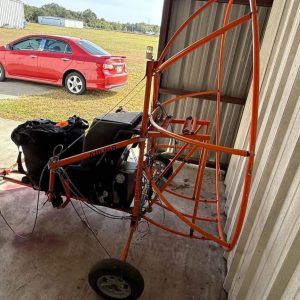
The Six Chuter SR2 Frame – Excellent Condition may serve as the starting point for a professionally evaluated restoration, parts project, display airframe, or completion using compatible systems. A Six Chuter SR2 Airframe can provide the structural base for a compatible project, while the Six Chuter SR2 Aircraft Frame should be examined carefully for alignment, corrosion, repairs, hardware condition, and completeness.
The Six Chuter Powered Parachute Frame and related SR2 Powered Parachute Frame, Six Chuter Aircraft Frame, Powered Parachute Airframe, and Powered Parachute Frame keywords help connect the product with restoration-focused buyers.
The Six Chuter SR2 Chassis may also attract customers searching for an Ultralight Aircraft Frame, Powered Parachute Chassis, Two-Seat Powered Parachute Frame, Six Chuter Airframe, or Paraplane Aircraft Frame.
The availability and cost of missing Powered Parachute Parts or Six Chuter Aircraft Parts can significantly influence the total budget and completion timeline.
Exploring the Six Chuter Aircraft Chassis
Qualified evaluation helps determine whether the structure is appropriate for restoration, rebuilding, parts recovery, display, or aircraft completion.
Cosmetic presentation and structural condition should be evaluated separately because fresh paint can conceal corrosion, cracks, dents, or previous repairs.
Powered Parachute Structural Inspection
The airframe should be checked for cracking, bending, dents, corrosion, elongated holes, damaged threads, loose joints, mismatched fasteners, and evidence of uncontrolled repairs.
Movement marks, cracked paint near welds, worn holes, uneven hardware loading, or misaligned brackets may indicate previous stress.
Powered Parachute Aircraft Project Planning
The frame can provide a valuable replacement option for an owner whose existing chassis has corrosion, accident damage, missing sections, or extensive repair needs.
Buyers should distinguish between a nearly complete rolling chassis and a bare structural frame requiring extensive sourcing.
Six Chuter Powered Parachute Frame Construction
Every alteration can affect load paths, clearances, alignment, balance, and compatibility with other systems.
The chassis should be protected from standing water, fuel contamination, chemical exposure, battery leakage, more info salt, mud, and prolonged outdoor storage.
Six Chuter Project Compatibility Planning
Compatibility should be established through exact model identification, serial details, measurements, records, photographs, and comparison with known SR2 components.
The canopy system should also correspond with the intended aircraft, attachment arrangement, operating requirements, and completed-aircraft characteristics.
Six Chuter Frame Rebuild Process
Unknown modifications should be documented and reviewed instead of copied automatically during reassembly.
Light surface oxidation may require different corrective action from pitting, internal corrosion, or structural deterioration near attachment points.
Six Chuter Chassis Inspection
Close photographs should show the full chassis and each major component from several angles.
A component should not be considered serviceable simply because it remained attached to a frame described as being in excellent condition.
Powered Parachute Classification Considerations
A two-seat powered parachute should not automatically be described as an ultralight merely because its frame is lightweight or used for recreational aviation.
Professional completion and documentation support responsible two-seat aircraft development.
Powered Parachute and Paraplane Terminology
The Six Chuter SR2 should remain identified by its actual manufacturer and model rather than presented as universally interchangeable with every paraplane design.
Transparent marketing supports stronger customer confidence and fewer transaction disputes.
Powered Parachute Parts for SR2 Projects
Powered Parachute Parts may include landing-gear assemblies, wheels, tires, seats, steering parts, controls, outriggers, cables, fuel tanks, brackets, engine mounts, electrical components, and hardware.
A project inventory should identify installed parts, loose components, missing systems, damaged items, duplicate hardware, and equipment requiring replacement.
Six Chuter Parts Compatibility
Every replacement component added during the project should be documented clearly.
Clear product information strengthens the value of Six Chuter Aircraft Parts and the complete project package.
Six Chuter SR2 Pre-Purchase Inspection
A careful review supports realistic budgeting and reduces uncertainty.
- Request images of the complete chassis, tubing, welds, landing-gear mounts, engine-support areas, seats, controls, outriggers, hardware, and identification plates.
- Arrange qualified evaluation whenever alignment, history, material condition, or repair quality remains uncertain.
- Require transportation methods that protect tubing, controls, landing gear, seats, wiring, brackets, hardware, and loose parts from impact or uncontrolled movement.
Protecting a Six Chuter Airframe in Transit
Careful transportation helps preserve the excellent-condition presentation of the Six Chuter SR2 Frame.
Open tubing, electrical connectors, fuel fittings, and mechanical parts should be capped or protected from contamination.
Completing the Six Chuter SR2 Project
Qualified technical oversight supports a more organized Six Chuter SR2 restoration.
Control function, steering, restraints, fuel integrity, engine operation, structural security, hardware, landing gear, propeller clearance, and canopy connections require evaluation.
Routine SR2 Structural Inspection
Long-term maintenance includes corrosion monitoring, cleaning, fastener checks, weld inspection, landing-gear review, control evaluation, engine-mount inspection, and attention to canopy-attachment areas.
Responsible maintenance supports long-term Six Chuter Airframe preservation.
Choosing the Six Chuter SR2 Frame – Excellent Condition
The Six Chuter SR2 Frame – Excellent Condition can provide a valuable foundation for restoration, rebuilding, component replacement, parts recovery, display, or completion as a professionally evaluated powered-parachute project.
The strongest purchasing decision begins with confirming the exact model, serial information, structural condition, accident history, repairs, corrosion, modifications, included components, missing systems, and available documentation.
Whether restorers are sourcing Powered Parachute Parts or Six Chuter Aircraft Parts, every component should be assessed individually for condition, identity, and compatibility.
With responsible purchasing, accurate configuration research, corrosion prevention, appropriate components, and structured completion planning, the chassis can remain a valuable powered-parachute platform.